🍪 We use cookies
We use cookies to enhance your experience, analyze site traffic, and for marketing purposes. By clicking "Accept All", you consent to our use of cookies. Read our Privacy Policy


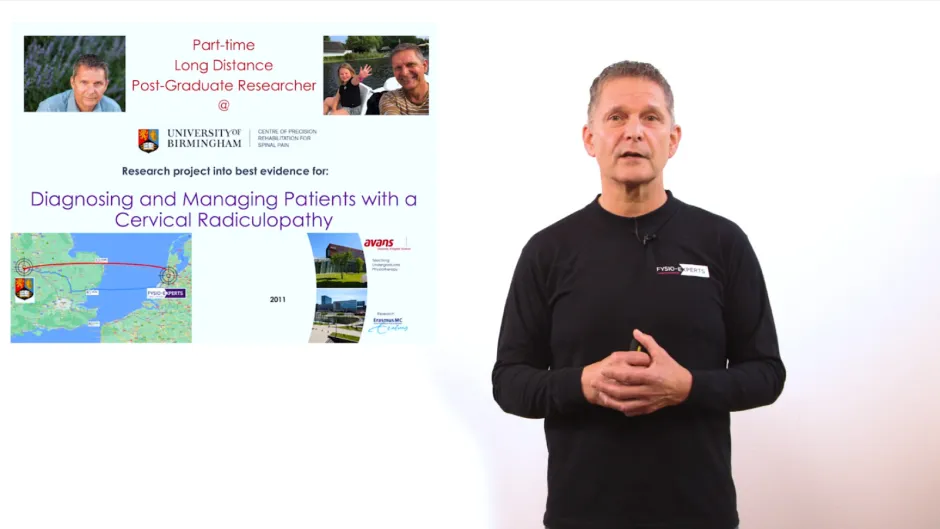
The first lecture is on how to differentiate patients with neck and radiating arm pain. In other words: What is the best way to identify if your patient has a cervical radiculopathy? In this lecture, we will cover the clinical reasoning process and the supporting evidence for deciding on the diagnosis “cervical radiculopathy”.
In the second lecture, we will cover the latest available evidence and a clinical reasoning process to formulate a patient specific staged conservative management program for a patient with a cervical radiculopathy.
Learning goals from the first lecture: Diagnosing
1. After this lecture you will be familiar with a definition for what a cervical radiculipathy is.
2. After this lecture you will be familiar with the course and prognosis for a patient with a cervical radiculopathy
3. After this lecture you will be able to differentiate patients with neck pain and radiating arm pain and its potential other causes.
Learning goals from the second lecture: Management
1. After this lecture you will be familiar with the scope of potentially effective treatmnet modalites for patients with a cervical radiculopathy
2. After this lecture you will be familiar with the evidence suppporting or negating proposed treatment modalities for patients with a cervical radiculopathy
3. After this lecture you will be able to compose an individualized and staged, patients specific management plan for for patients with a cervical radiculopathy.
Learn how to identify cervical radiculopathy by distinguishing neck and radiating arm pain from other serious or commonly mistaken conditions. Discover the key history findings, clinical tests, and red flags that sharpen diagnosis and guide confident next steps.
Explore how cervical radiculopathy is best managed across acute, subacute, and chronic stages, with a focus on when to treat, when to wait, and which conservative strategies show the most promise. You’ll also discover how neurodynamic mobilization and ultrasound tracking of median nerve movement may help guide smarter clinical decisions.
The first lecture is on how to differentiate patients with neck and radiating arm pain. In other words: What is the best way to identify if your patient has a cervical radiculopathy? In this lecture, we will cover the clinical reasoning process and the supporting evidence for deciding on the diagnosis “cervical radiculopathy”.
In the second lecture, we will cover the latest available evidence and a clinical reasoning process to formulate a patient specific staged conservative management program for a patient with a cervical radiculopathy.
Learning goals from the first lecture: Diagnosing
1. After this lecture you will be familiar with a definition for what a cervical radiculipathy is.
2. After this lecture you will be familiar with the course and prognosis for a patient with a cervical radiculopathy
3. After this lecture you will be able to differentiate patients with neck pain and radiating arm pain and its potential other causes.
Learning goals from the second lecture: Management
1. After this lecture you will be familiar with the scope of potentially effective treatmnet modalites for patients with a cervical radiculopathy
2. After this lecture you will be familiar with the evidence suppporting or negating proposed treatment modalities for patients with a cervical radiculopathy
3. After this lecture you will be able to compose an individualized and staged, patients specific management plan for for patients with a cervical radiculopathy.
We usually answer within a minute.
Ask anything about your membership, certificates or what is in the library.
No comments yet…