🍪 We use cookies
We use cookies to enhance your experience, analyze site traffic, and for marketing purposes. By clicking "Accept All", you consent to our use of cookies. Read our Privacy Policy
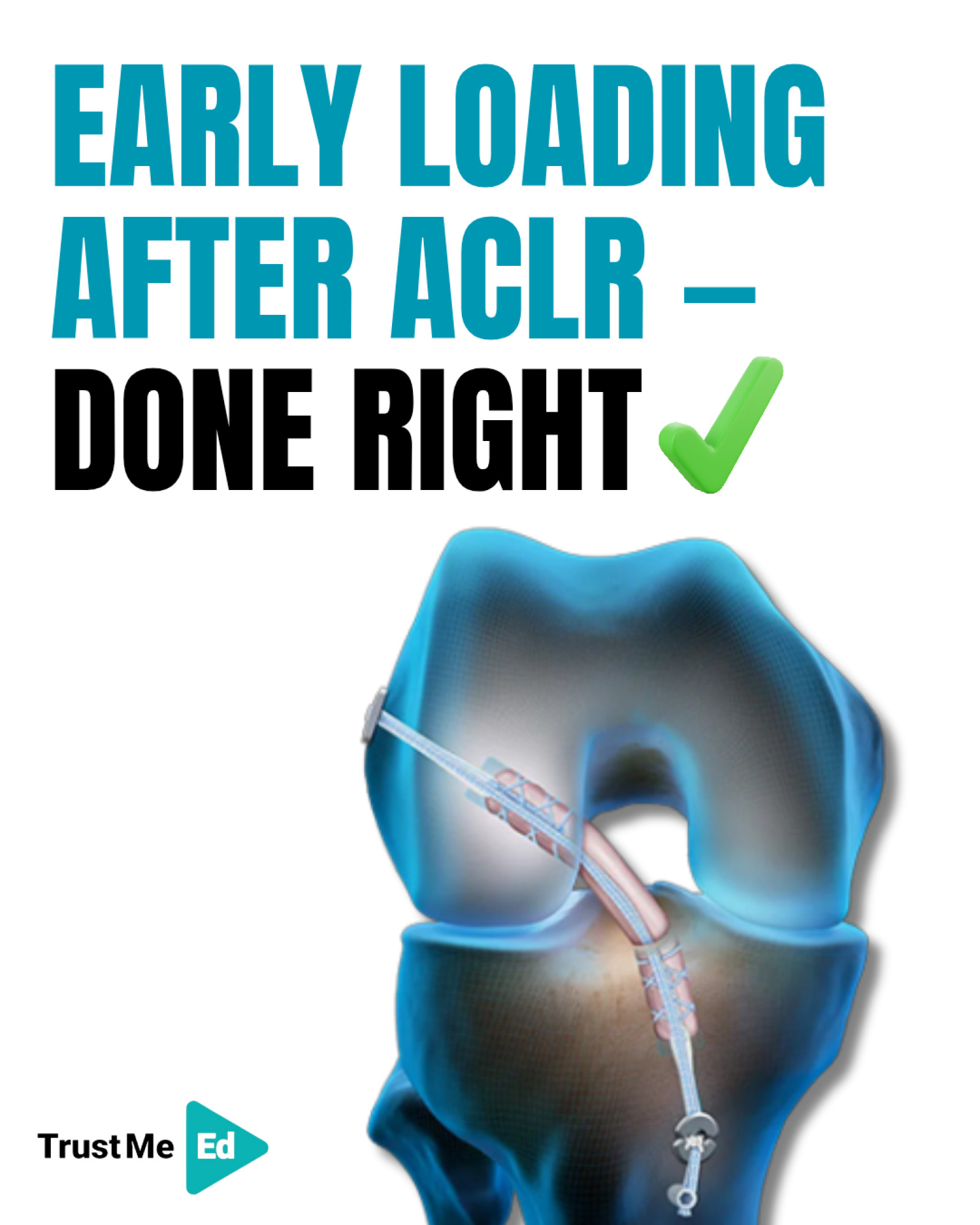
For a long time, early loading after ACL reconstruction (ACLR) has been treated with caution — sometimes excessive caution. The fear of harming the graft, increasing pain, or provoking swelling often leads to overly conservative rehab in the early weeks.
But early loading, when done intentionally and strategically, is not reckless. It is one of the most powerful tools we have to restore movement confidence, muscle function, and long-term capacity.
If you want to learn more about this topic, you can watch Nicole Surdyka's lecture here:
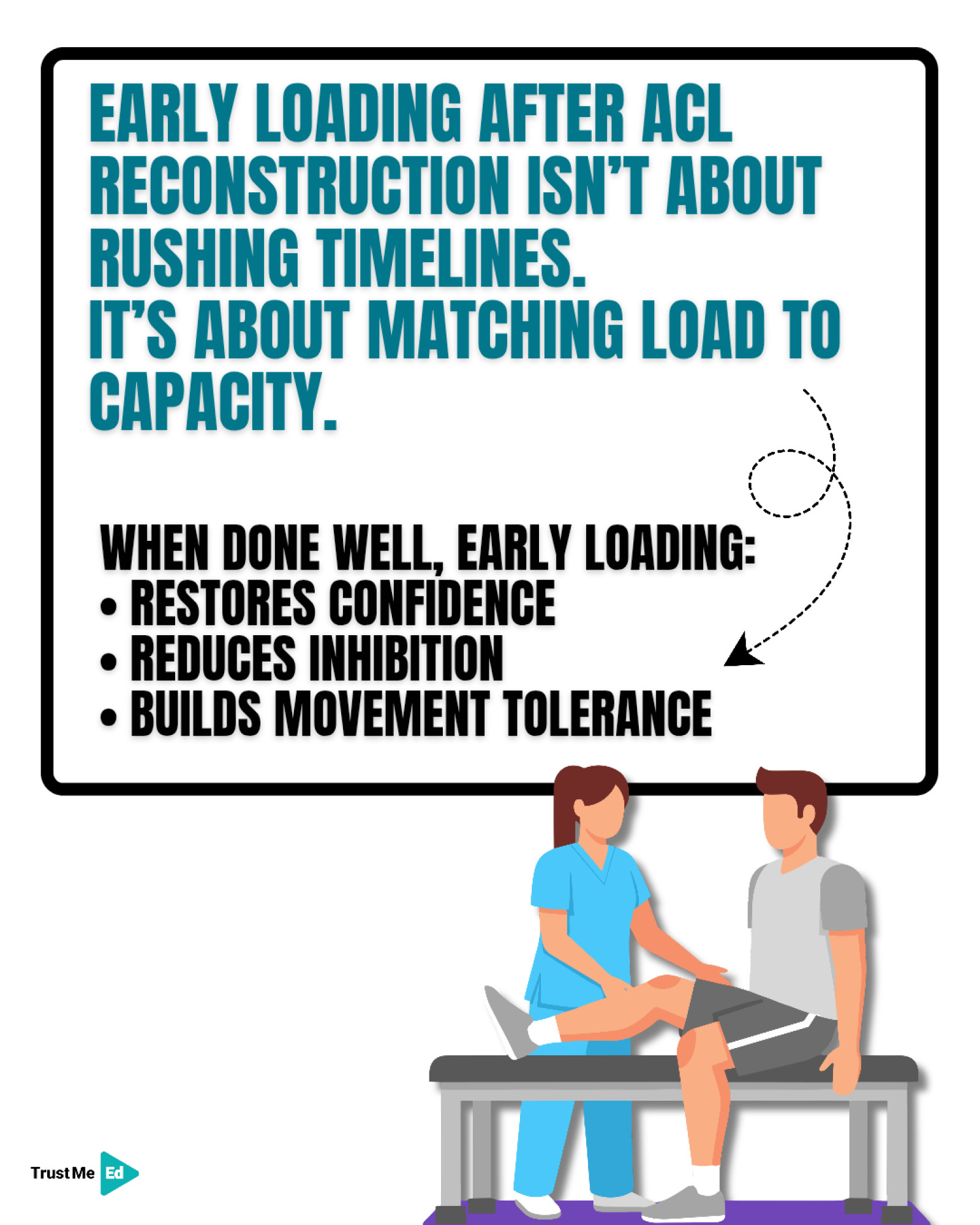
Early loading is not about doing more
A common misconception is that early loading means pushing harder or progressing faster.
In reality, early loading is about:
• Respecting tissue healing timelines
• Understanding arthrogenic muscle inhibition (AMI)
• Managing pain and swelling
• Choosing the right type of load at the right time
After surgery, poor quadriceps activation and limited ROM are rarely a problem of effort. They are largely driven by:
• Pain and joint effusion
• Neural inhibition
• Fear and loss of movement confidence
Avoiding load completely can actually prolong these issues.
Strategic early loading helps:
• Restore quad force production
• Reduce arthrogenic muscle inhibition
•Improve ROM tolerance
• Prevent excessive deconditioning
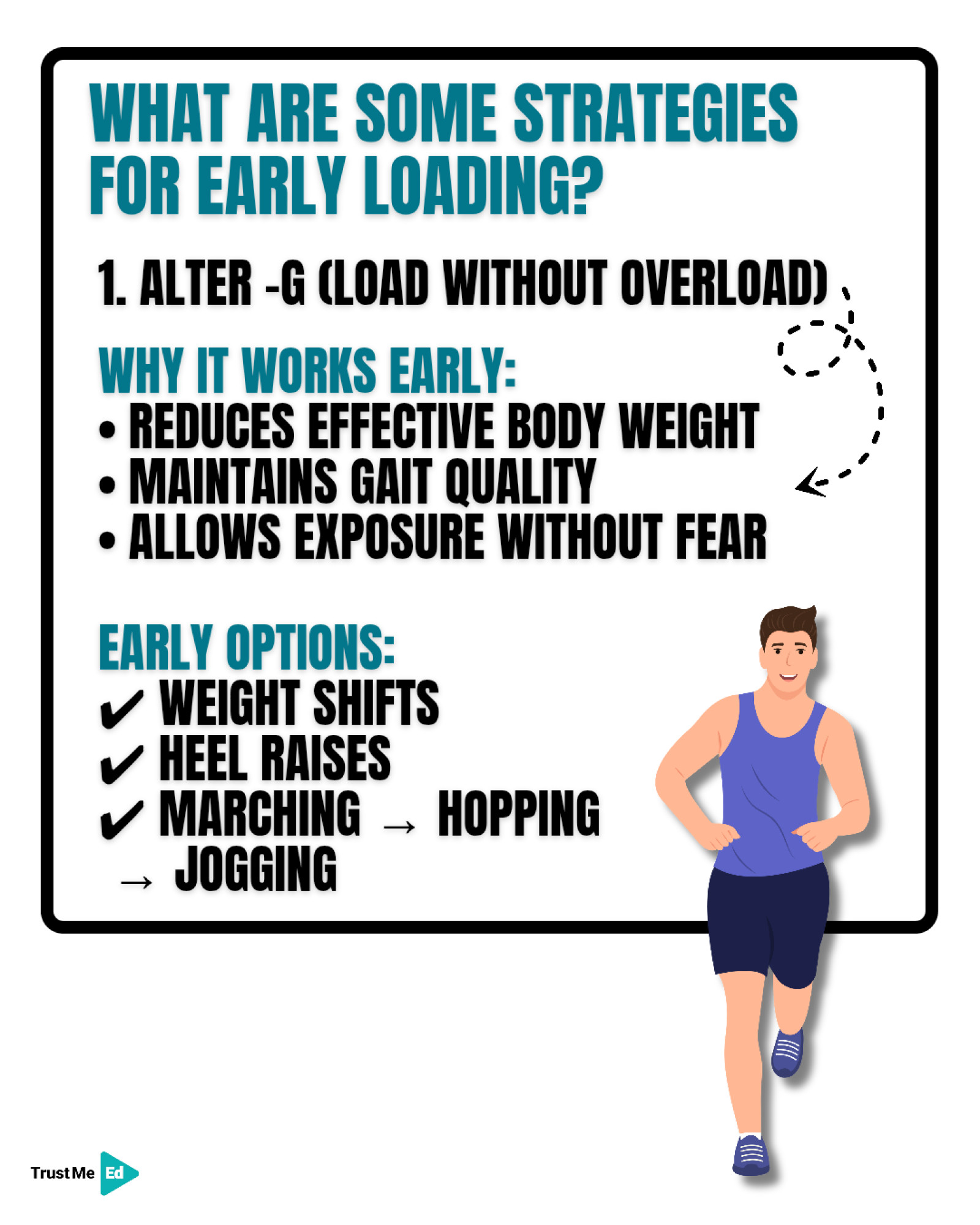
When full bodyweight is not tolerated, tools like the AlterG :
• Reduce effective bodyweight
• Maintain movement quality
• Progress walking, jogging, or hopping earlier
This keeps movement patterns alive while respecting current capacity.
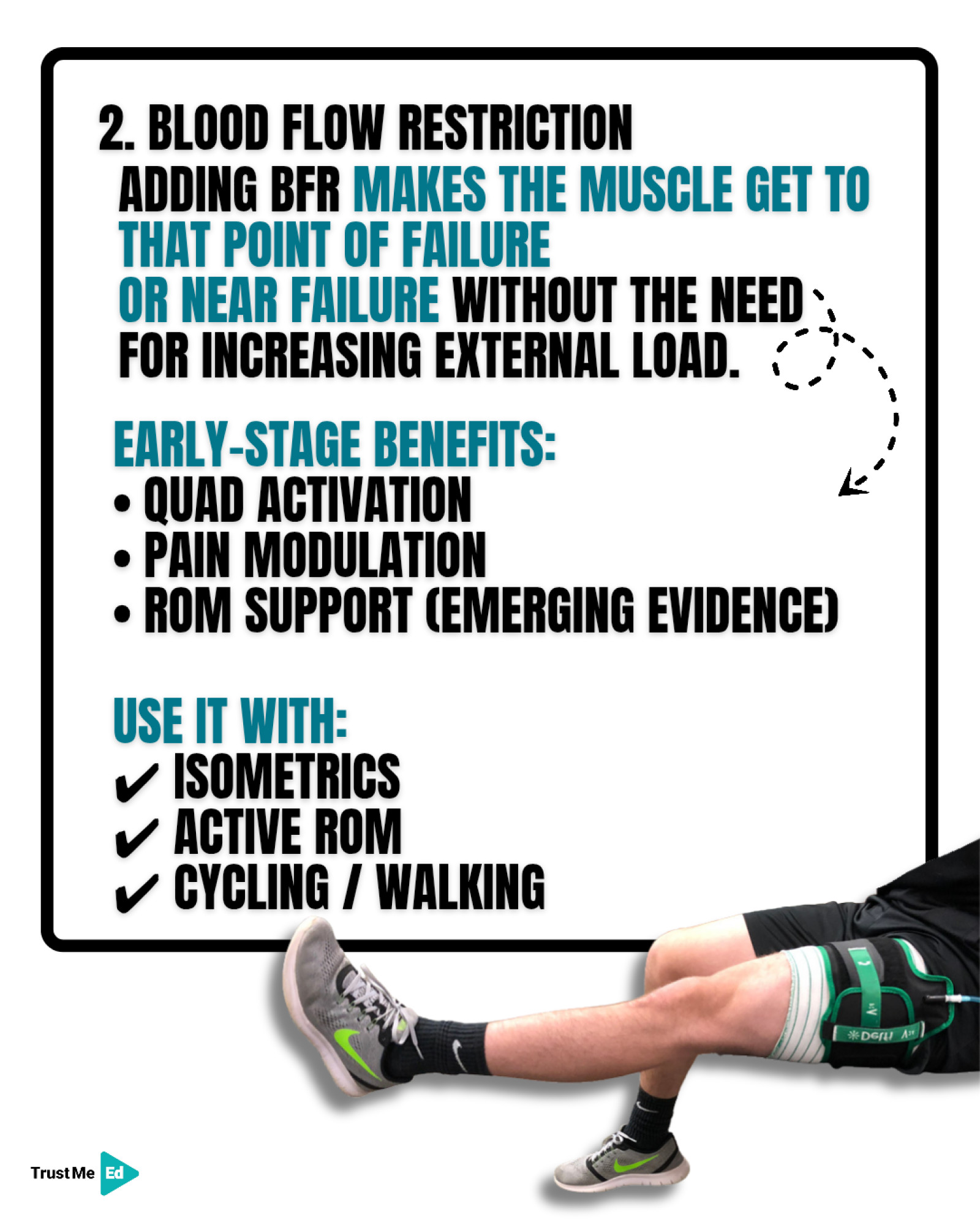
In the early stages post-ACLR, external load is often restricted.
BFR allows:
• Muscle hypertrophy and strength stimulus at low loads
• Reduced atrophy during protected phases
• Earlier engagement of the quadriceps
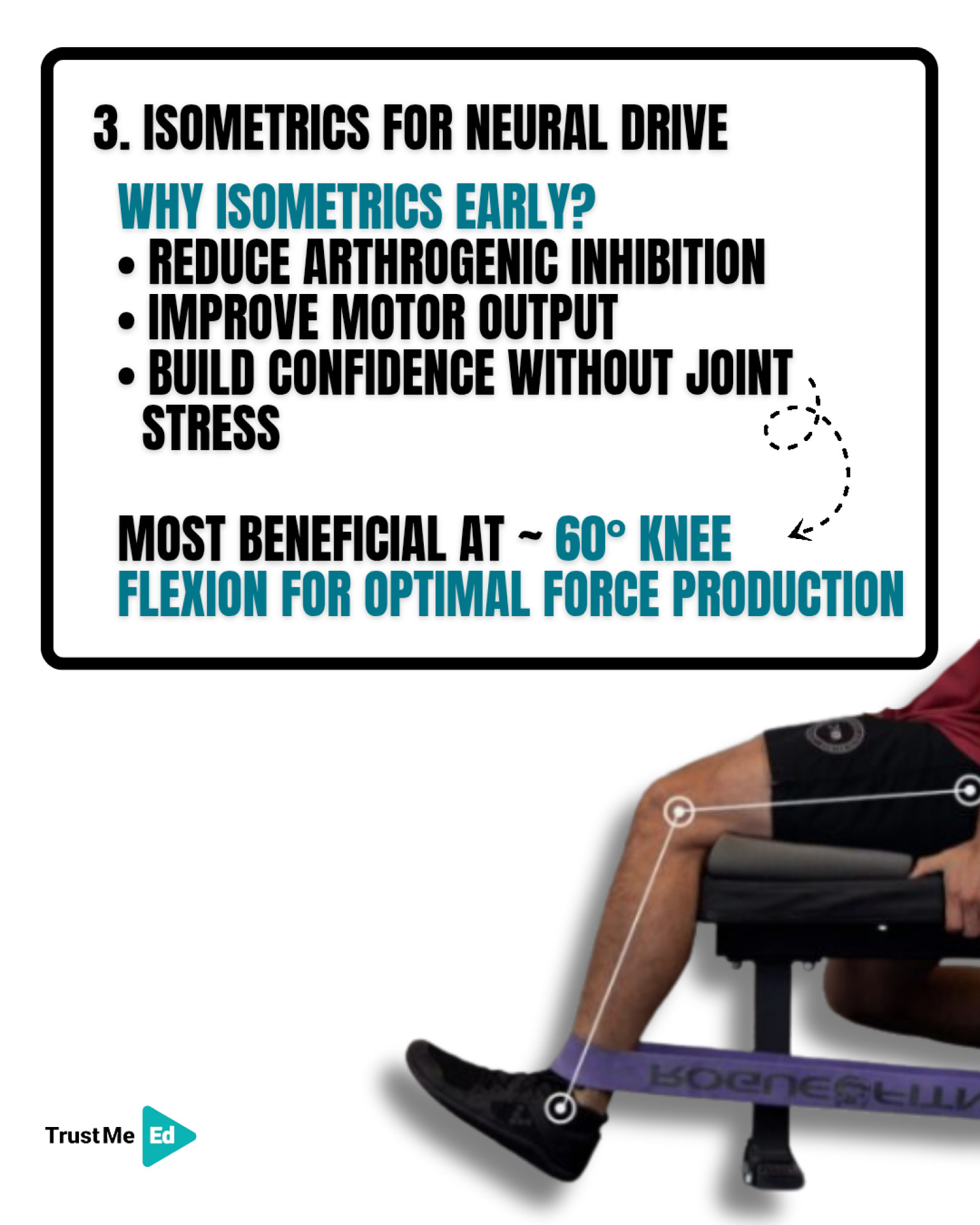
Isometric contractions are one of the most underappreciated early loading tools.
They allow:
• High muscle activation with minimal joint movement
• Safer force production when ROM is limited
• Reduced pain through neural mechanisms
Early loading only works when response is monitored.
Key markers to track:
• Pain during and after sessions
• Joint effusion
• ROM changes
• Quality of movement
If you want to learn more about this topic, you can watch Nicole Surdyka's lecture here:
Source:
From the lecture ‘Early Post-Op Rehab After ACL Reconstruction’

Bringing high-quality classes so you can help your patients better. Learn from the world's leading experts, from the comfort of your home. Staying up to date has never been easier.
© 2026 TrustMe. All rights reserved.
We usually answer within a minute.
Ask anything about your membership, certificates or what is in the library.