Lateral Ankle Sprains: A Mechanism-driven Assessment Framework

Lateral ankle sprains are one of the most common injuries seen in musculoskeletal and sports physiotherapy.
Yet many assessments default to:
“It’s an inversion injury”
Quick ligament testing
A generic rehab plan
For physiotherapists, assessment should go deeper.
A high-quality evaluation is mechanism-driven, tissue-specific, and functionally oriented.
If you want to learn more about this topic, you can watch Eamonn Delahunt's lecture here:
1. Mechanism First: Before you touch the ankle
Biomechanical analysis of real injury footage (including work by Daniel Fong published in the American Journal of Sports Medicine in 2012) shows that lateral ankle sprains typically involve:
• High-magnitude inversion
• High-velocity movement
• Internal rotation
• Peak motion within 200–600 ms
In numerous instances, the ankle is already inverted at initial contact.
What is the clinical implication of this for physios:
If the injury occurred during cutting, landing, or stepping on another athlete’s foot, you should already be prioritising lateral ligament structures in your hypothesis.
Subjective history drives tissue suspicion.
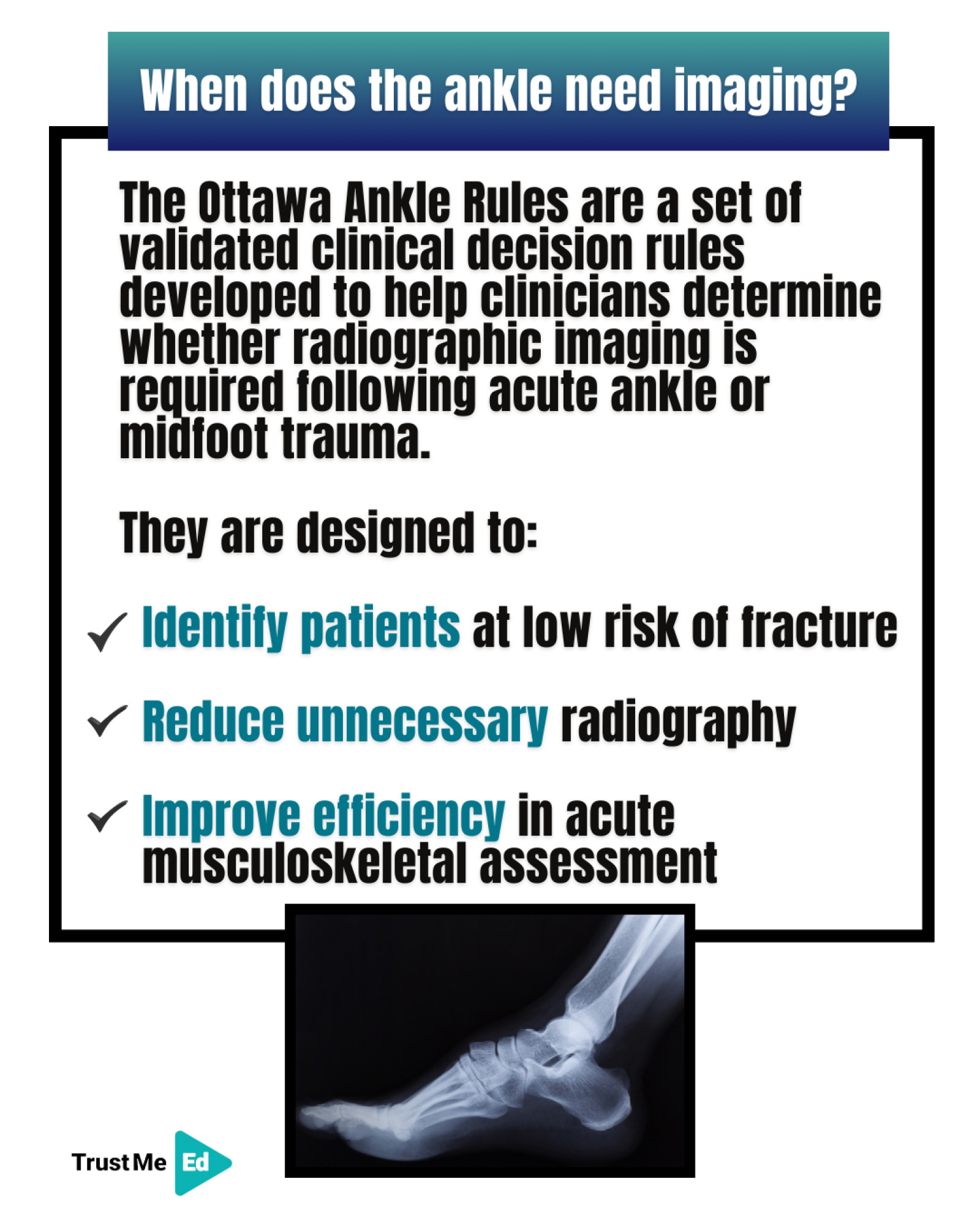
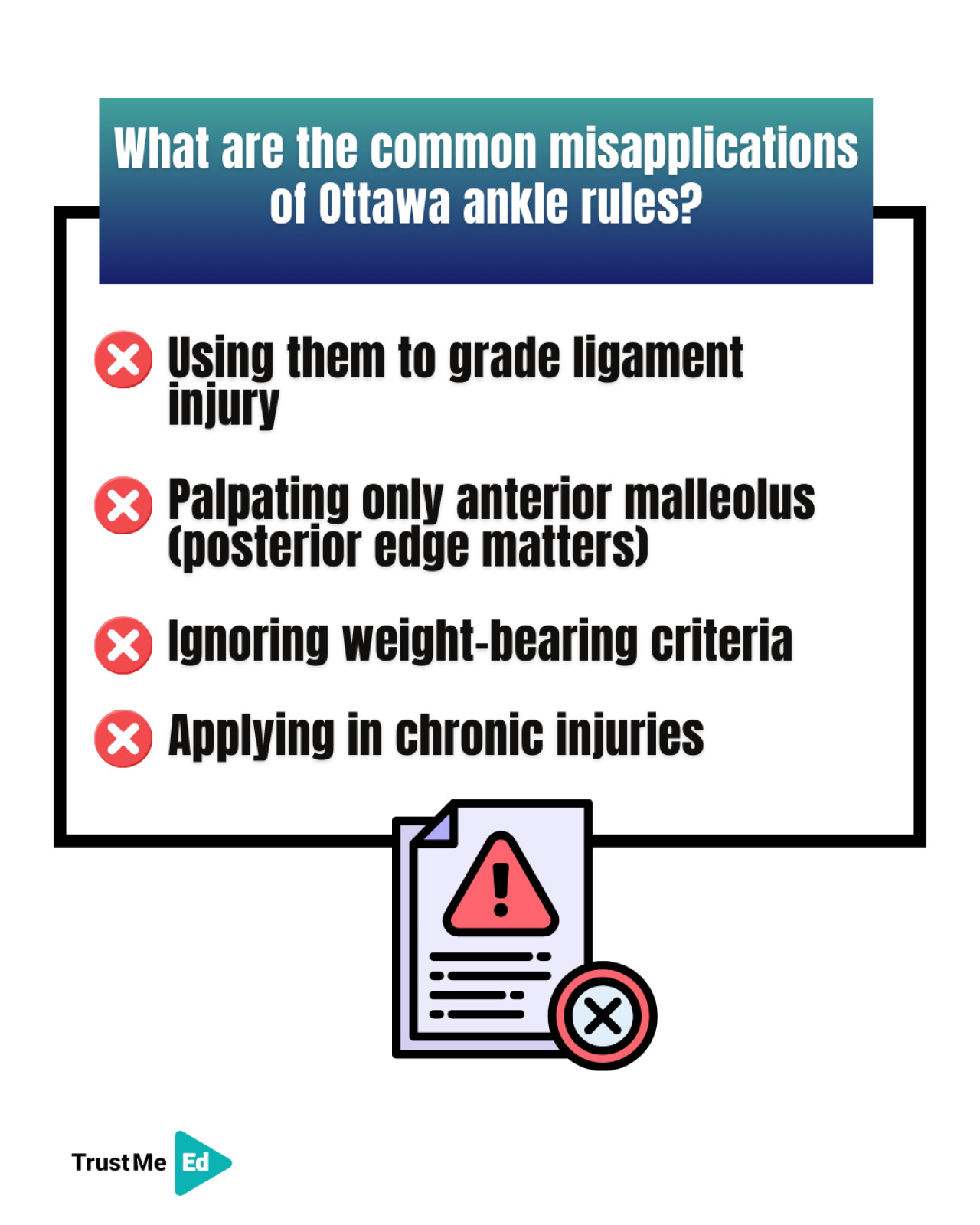
2. Rule out fracture: Apply the Ottawa ankle rules
Before focusing on ligament integrity, exclude fracture.
The Ottawa Ankle Rules are highly sensitive for detecting clinically significant fractures and should be part of every acute ankle assessment.
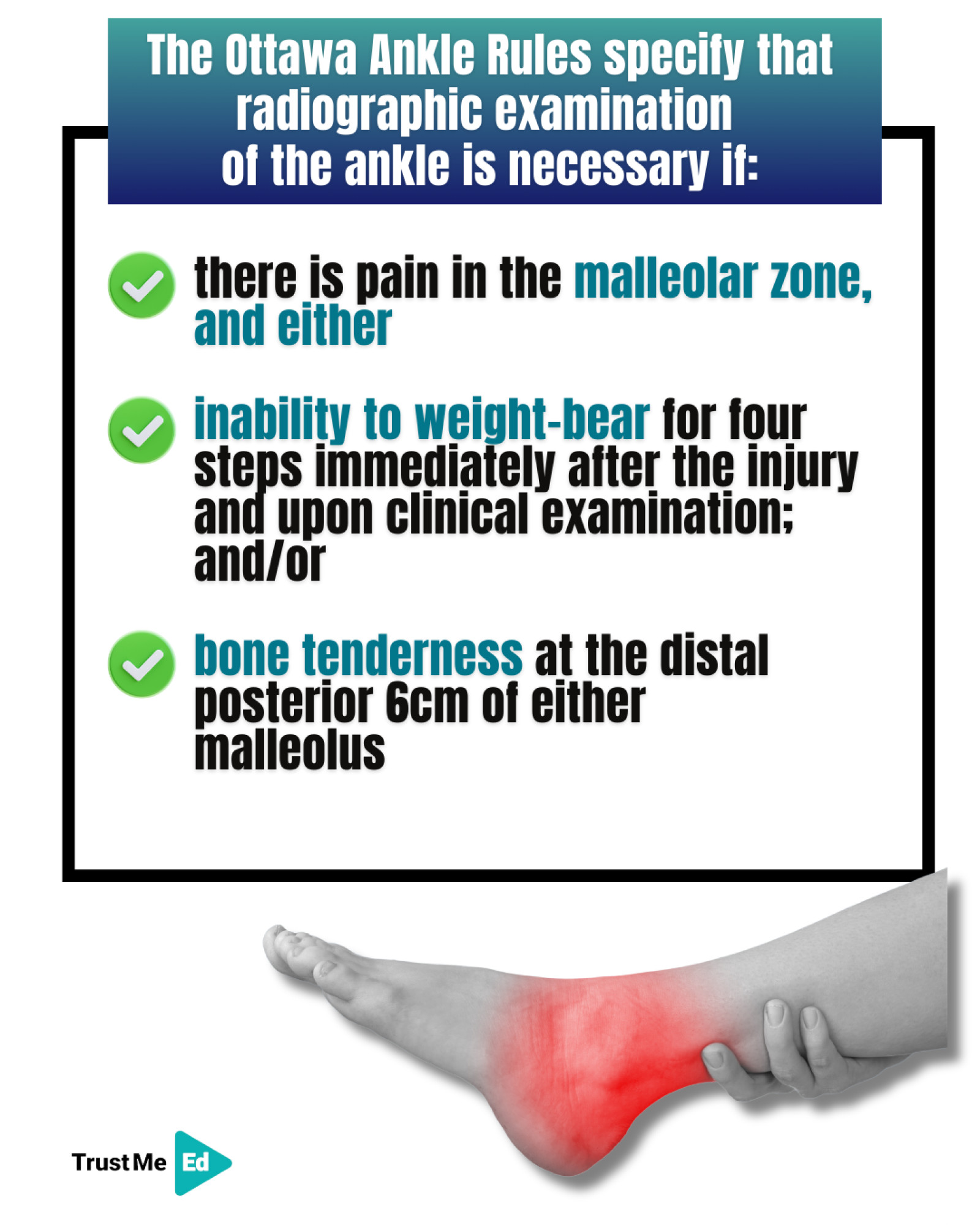
An ankle X-ray series is indicated if there is:
✓ Pain in the malleolar zone and
✓ Bone tenderness along the posterior edge or tip of the lateral malleolus (distal 6 cm), or
✓ Bone tenderness along the posterior edge or tip of the medial malleolus, or
✓ Inability to bear weight both immediately after injury and in clinic (4 steps)
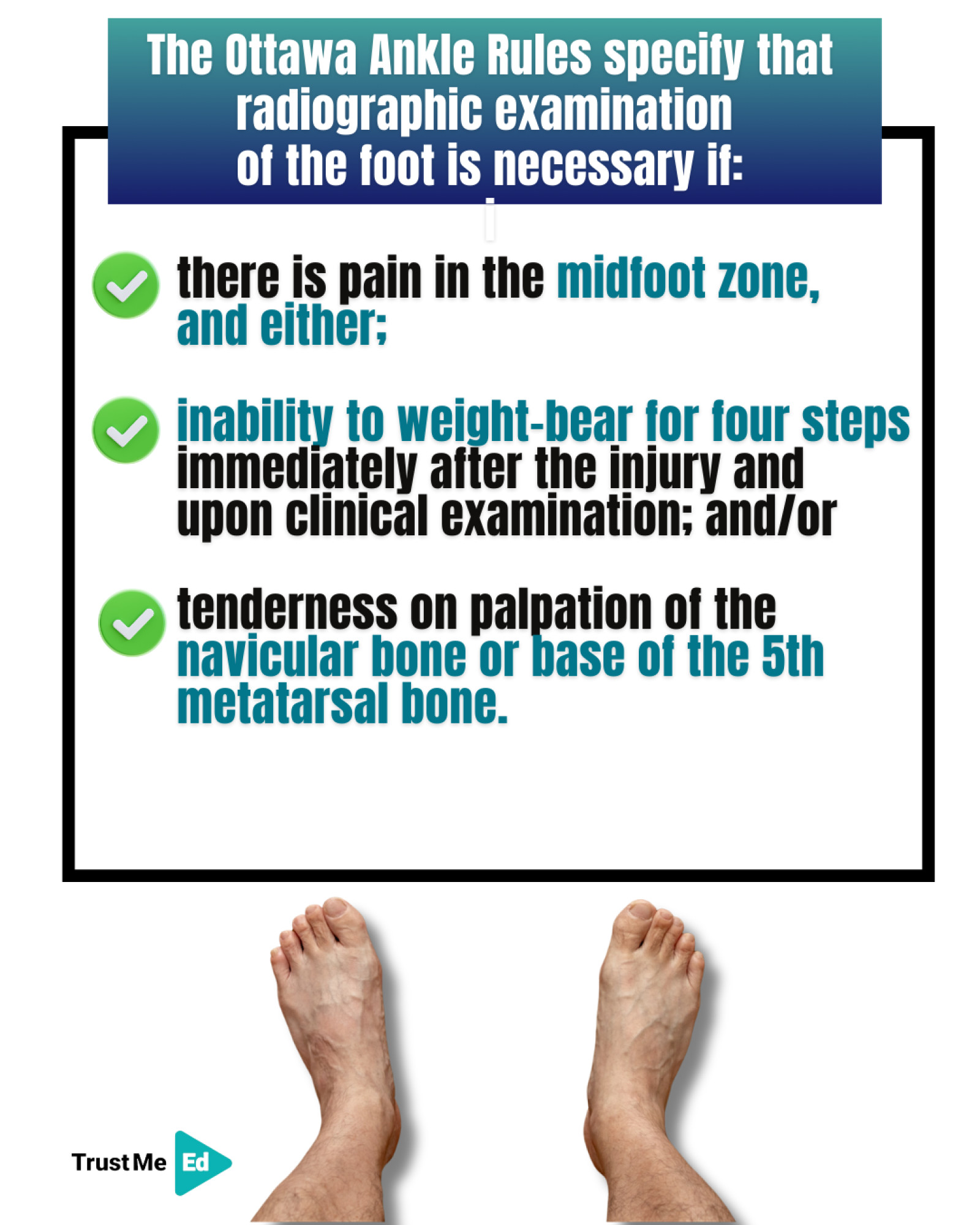
A foot X-ray series is indicated if there is:
✓ Pain in the midfoot zone and
✓ Bone tenderness at the base of the 5th metatarsal, or
✓ Bone tenderness at the navicular, or
✓ Inability to weight bear (4 steps)
Fracture exclusion protects both patient safety and your treatment planning.

3. Tissue-Specific Examination
Most commonly involved structures:
• Anterior talofibular ligament (ATFL)
• Calcaneofibular ligament (CFL)
The ATFL is typically the first to be injured due to its orientation and resistance to anterior talar translation during inversion.
Objective assessment includes:
☑ Localised palpation tenderness
☑ Anterior drawer test (ATFL)
☑ Talar tilt test (CFL)
In acute settings, swelling and guarding reduce reliability.
Reassessment at 5–7 days often provides more useful information than day-one laxity grading.
4. Assess beyond passive stability
Ligament injury does not equal functional instability. Recurrent sprains are often driven by neuromuscular deficits rather than isolated passive laxity.
Progress assessment (when tolerated) to:
• Single-leg stance
• Dynamic balance testing
• Landing mechanics
• Change-of-direction control
• Perturbation response
Look for:
• Inversion at initial contact
• Poor frontal plane hip control
• Delayed peroneal activation
• Reduced confidence or guarding
Dynamic assessment informs rehabilitation planning far more than static testing alone.
5. Consider subtalar joint loading
Landing in inversion increases the external inversion moment at the subtalar joint. Greater inversion at contact leads to greater external torque, which eventually leads to greater ligament strain.
This should shift our thinking from “Which ligament is injured?” to “Why did this athlete load into inversion in the first place?”
Assessment should therefore include:
✓ Foot position at contact
✓ Trunk contribution
✓ Hip control
✓ Exposure to high ground reaction forces
Key Takeaways
Lateral ankle sprains are rapid, multiplanar, high-load injuries.
A strong physiotherapy assessment:
• Integrates mechanism
• Applies the Ottawa Ankle Rules
• Identifies tissue involvement
• Assesses dynamic stability
• Links findings directly to rehabilitation planning
An ankle sprain is not simply a “rolled ankle.” It is a biomechanical event which the assessment should reflect.
If you want to learn more about this topic, you can watch Eamonn Delahunt's lecture here:
Source:
1. From the lecture ‘‘The Clinical Assessment of Acute Lateral Ankle Sprain Injuries" by Professor Eamonn Delahunt.