🍪 We use cookies
We use cookies to enhance your experience, analyze site traffic, and for marketing purposes. By clicking "Accept All", you consent to our use of cookies. Read our Privacy Policy


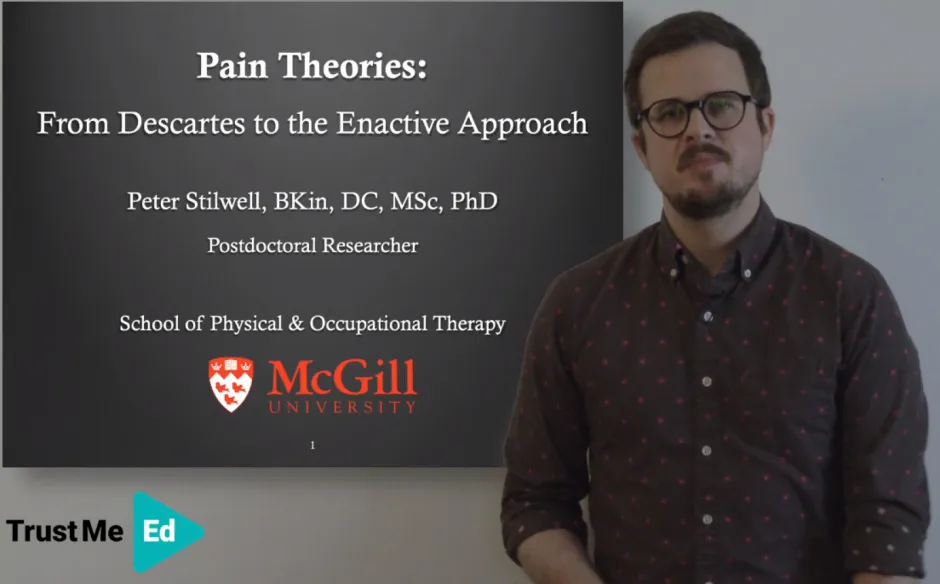
Peter did a 2-part lecture titled: Pain Theories: From Descartes to the Enactive Approach. In part 1, he discusses influential pain theories that have impacted clinical practice. He discusses the pros and cons of these theories, including the application of the biopsychosocial model to pain. In part 2, he discusses how the enactive approach to pain is a truly holistic approach that adds to the biopsychosocial model. He gives examples of how the enactive approach may help us better understand pain and validate patients’ complex experiences.
This 2-Part Lecture Will:
· Review historical pain theories from Descartes up to the biopsychosocial model of pain.
· Outline why it is important to consider our pain theories.
· Discuss limitations of the biopsychosocial model when applied to pain.
· Introduce the enactive approach to pain and some of its core constructs. · Discuss the clinical implications of pain theories, including the enactive approach to pain.
Rethink pain through the enactive approach, where experience emerges from the dynamic interplay of brain, body, action, and environment. Discover how ideas like affordances, relationality, emergence, and prediction can reshape clinical practice and open new ways to help people manage pain.
Explore how ideas about pain have evolved from Descartes’ mechanical model to modern biopsychosocial thinking, and why those theories shape the way people are assessed, diagnosed, and treated. You’ll also see where common explanations fall short and how an enactive approach offers a broader, more human view of pain.
Peter did a 2-part lecture titled: Pain Theories: From Descartes to the Enactive Approach. In part 1, he discusses influential pain theories that have impacted clinical practice. He discusses the pros and cons of these theories, including the application of the biopsychosocial model to pain. In part 2, he discusses how the enactive approach to pain is a truly holistic approach that adds to the biopsychosocial model. He gives examples of how the enactive approach may help us better understand pain and validate patients’ complex experiences.
This 2-Part Lecture Will:
· Review historical pain theories from Descartes up to the biopsychosocial model of pain.
· Outline why it is important to consider our pain theories.
· Discuss limitations of the biopsychosocial model when applied to pain.
· Introduce the enactive approach to pain and some of its core constructs. · Discuss the clinical implications of pain theories, including the enactive approach to pain.
We usually answer within a minute.
Ask anything about your membership, certificates or what is in the library.
No comments yet…