🍪 We use cookies
We use cookies to enhance your experience, analyze site traffic, and for marketing purposes. By clicking "Accept All", you consent to our use of cookies. Read our Privacy Policy


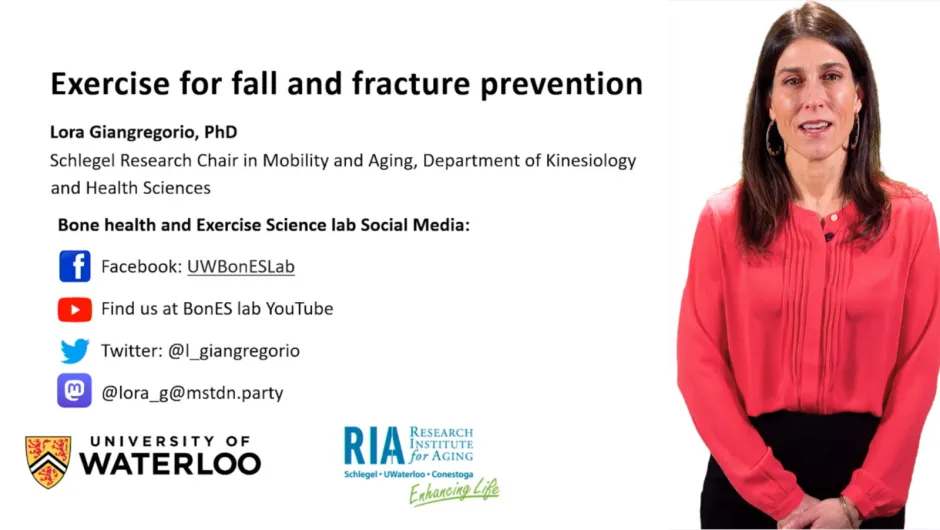
Exercise is often recommended for fall and fracture prevention, but we need to consider specificity when selecting exercises, because the types and intensities of exercise one should do will depend on the therapeutic goal you wish to prioritize. For example, exercises that are effective for fall prevention may not have an effect on bone mineral density.
The purpose of this lecture is to review the evidence on exercise for people at risk of fracture, and discuss how to implement it. We will also briefly review tips to address pain and physical functioning in individuals with vertebral fractures due to osteoporosis.
1. Understand the evidence related to exercise for fall and fracture prevention.
2. Identify the types of exercise that are effective for preventing falls and fractures, with examples.
3. Learn tips on the care of individuals with vertebral fractures due to osteoporosis.
Learn how osteoporosis weakens bone, raises fracture risk, and why falls play such a major role in injuries for both women and men. Discover the key risk factors, screening tools, and practical strategies to protect bone health and reduce fractures.
Discover which types of exercise may help prevent falls and fractures, improve bone density, and support daily function in adults at higher risk of osteoporosis-related injury. You’ll also learn how to match exercise choices to specific goals while keeping safety and real-world practice in mind.
Learn how to guide people with osteoporosis or spinal fractures through daily activities, exercise, and hobbies with practical, low-fear strategies that reduce risk without limiting independence. Discover how movement modifications, pain management, and gradual return to activity can support safer, more confident participation.
Discover how to prescribe safe, effective exercise for people with osteoporosis by prioritizing resistance and balance training to reduce falls and fractures. You’ll also learn which movements may need modification, how to progress exercises confidently, and how to support strength, posture, and bone health.
Exercise is often recommended for fall and fracture prevention, but we need to consider specificity when selecting exercises, because the types and intensities of exercise one should do will depend on the therapeutic goal you wish to prioritize. For example, exercises that are effective for fall prevention may not have an effect on bone mineral density.
The purpose of this lecture is to review the evidence on exercise for people at risk of fracture, and discuss how to implement it. We will also briefly review tips to address pain and physical functioning in individuals with vertebral fractures due to osteoporosis.
1. Understand the evidence related to exercise for fall and fracture prevention.
2. Identify the types of exercise that are effective for preventing falls and fractures, with examples.
3. Learn tips on the care of individuals with vertebral fractures due to osteoporosis.
We usually answer within a minute.
Ask anything about your membership, certificates or what is in the library.
No comments yet…