🍪 We use cookies
We use cookies to enhance your experience, analyze site traffic, and for marketing purposes. By clicking "Accept All", you consent to our use of cookies. Read our Privacy Policy


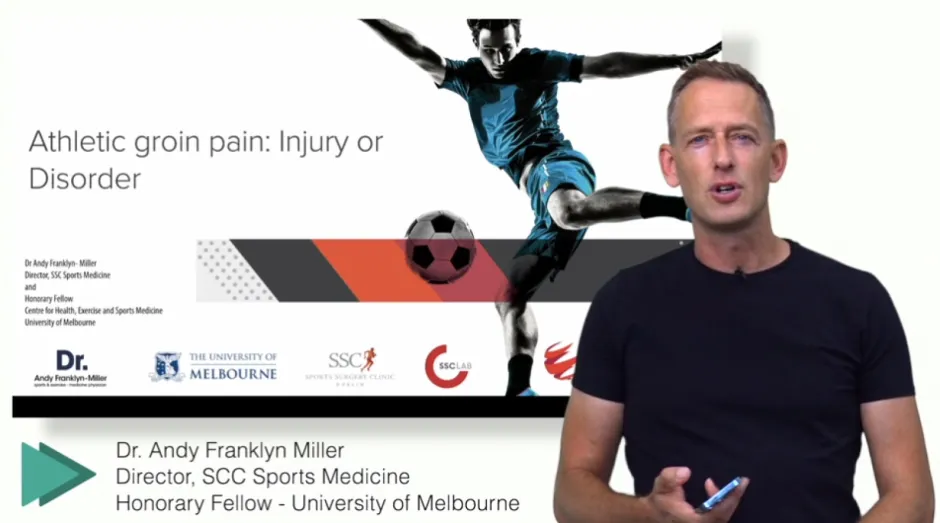
He then discusses the anatomy and controversies in the literature and how conservative management does versus surgical with the key rehabilitation studies included. He then introduces the concept of Biomechanical overload and challenges the belief that this is in fact an injury rather than a disorder. He talks us through the key concepts of rehabilitation and walks through progressive video exercises to allow key focus on multi-segmental rehabilitation and shares thoughts about the condition in the future.
How common and costly athletic groin pain is in multidirectional sport, how researchers and surgeons have blamed different structures, and why the main consensus statements describe pain without proving an injury.
What trials say about rehabilitation versus surgery for athletic groin pain, how a hip and groin clinical exam is performed, and what clinical and MRI findings showed in a cohort of 382 athletes.
How 3D change of direction testing grouped athletes with groin pain into movement clusters, how an intersegmental rehab program with running cut return to play to 9.9 weeks, and which movement features guide exercise choice.
Strength exercise streams for athletic groin pain rehab, covering the squat, lateral hip, end-range hip flexors, abdominals and deadlift, with entry exercises, coaching cues, common errors and how to progress or regress each.
Dynamic coupling drills for athletic groin pain, from leg change and lateral shuffle streams to skipping and 180 degree cuts, plus calf and soleus capacity work and the criteria for starting running and change of direction.
He then discusses the anatomy and controversies in the literature and how conservative management does versus surgical with the key rehabilitation studies included. He then introduces the concept of Biomechanical overload and challenges the belief that this is in fact an injury rather than a disorder. He talks us through the key concepts of rehabilitation and walks through progressive video exercises to allow key focus on multi-segmental rehabilitation and shares thoughts about the condition in the future.
We usually answer within a minute.
Ask anything about your membership, certificates or what is in the library.
No comments yet…