🍪 We use cookies
We use cookies to enhance your experience, analyze site traffic, and for marketing purposes. By clicking "Accept All", you consent to our use of cookies. Read our Privacy Policy


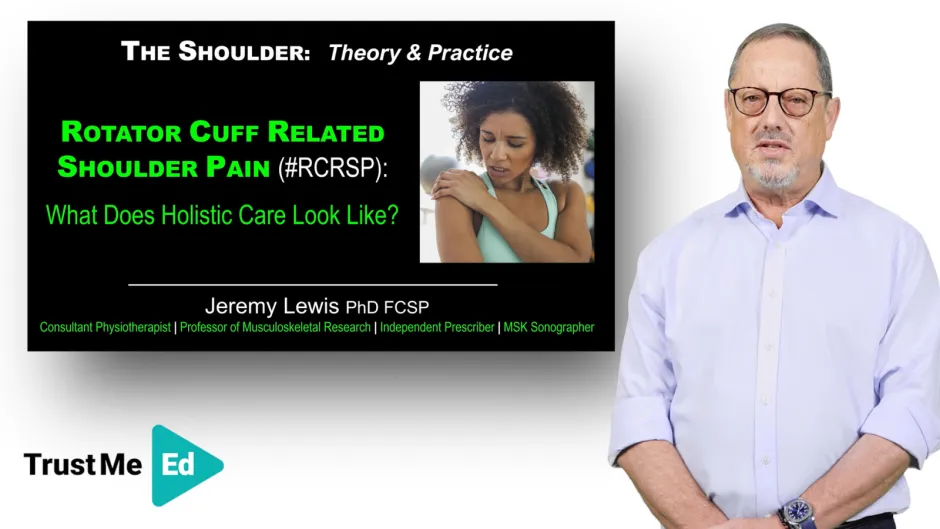
This lecture will discuss how the combination of physical and lifestyle overload may lead to this most common of shoulder conditions. After discussing this premise arguments will be made that traditional physical management (i.e. exercise and adjuncts such as touch therapy) will not achieve the outcomes both those seeking and those providing care are hoping for. Lifestyle factors that will be discussed include; sleep and stress, smoking, obesity, and insufficient physical activity. An argument will be made that our profession must evolve to enable physical therapists to assess lifestyle factors as they assess physical factors and sensitively discuss any concerns with patients and support them as possible through the behavioral change process. This may need to be achieved in multidisciplinary teams. Shared decision making and patient self-management will underpin this keynote.
Learning Objectives
1. To understand how lifestyle factors may contribute to symptoms associated with rotator cuff related shoulder pain
2. To learn how the Shape-Up-My-Shoulder (#SUMS) rehabilitation program attempts to address these physical and lifestyle factors.
3. To describe the behavioral change process and how physical therapists and other healthcare professionals may support those seeking care through the process of change.
This lecture will discuss how the combination of physical and lifestyle overload may lead to this most common of shoulder conditions. After discussing this premise arguments will be made that traditional physical management (i.e. exercise and adjuncts such as touch therapy) will not achieve the outcomes both those seeking and those providing care are hoping for. Lifestyle factors that will be discussed include; sleep and stress, smoking, obesity, and insufficient physical activity. An argument will be made that our profession must evolve to enable physical therapists to assess lifestyle factors as they assess physical factors and sensitively discuss any concerns with patients and support them as possible through the behavioral change process. This may need to be achieved in multidisciplinary teams. Shared decision making and patient self-management will underpin this keynote.
Learning Objectives
1. To understand how lifestyle factors may contribute to symptoms associated with rotator cuff related shoulder pain
2. To learn how the Shape-Up-My-Shoulder (#SUMS) rehabilitation program attempts to address these physical and lifestyle factors.
3. To describe the behavioral change process and how physical therapists and other healthcare professionals may support those seeking care through the process of change.
We usually answer within a minute.
Ask anything about your membership, certificates or what is in the library.
No comments yet…