🍪 We use cookies
We use cookies to enhance your experience, analyze site traffic, and for marketing purposes. By clicking "Accept All", you consent to our use of cookies. Read our Privacy Policy


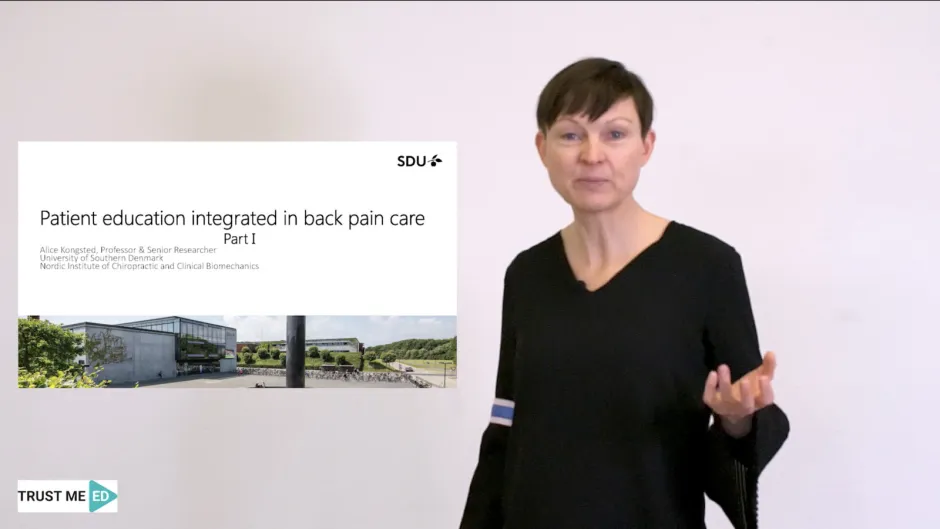
Lecture 1 discusses some common misconceptions about back pain and why it is important for clinicians to be aware of peoples’ beliefs and fears related to back pain. The lecture addresses the concept of reassurance and how clinicians may support helpful back pain beliefs and communicate in a way that supports patients’ sense of pain control.
Lecture 2 talks about how education might help people improve from back pain and pain related activity limitations. Next, it is discussed if there is a mismatch between positive key messages of patient education and offering other treatments for back pain such as exercise therapy or manual therapy. The lecture addresses how conflicting messages might emerge in back pain care and points to aspects for clinicians to be aware of to avoid these.
Learning objectives
> You should be able to address some of the reasons why patient education should be integrated in back pain care.
> You should be able to discuss how patient education can be integrated with other parts of the treatment for back pain.
Discover how effective back pain education can replace fear with confidence by correcting common myths, strengthening self-efficacy, and encouraging safe movement. Learn why listening closely, giving clear reassurance, and pairing education with active care can improve outcomes in primary care. Alice Kongsted presents.
Discover a fresh, patient-centered approach to back pain that moves beyond fixing and fear. Learn how clear communication, reassurance, and guided movement can build confidence, reduce disability, and help people regain control over their recovery.
Learn how changing beliefs about back pain can reduce fear, ease pain, and help people return to movement with more confidence. Discover how education, exercise, and hands-on care can work together to support self-management without reinforcing harmful myths or unnecessary alarm. Alice Kongsted presents.
Discover a more confident, less corrective approach to back pain exercise—one that encourages safe movement, variation, and trust in the body. Learn how supportive guidance can reduce fear, ease pain-related anxiety, and help patients move with greater freedom.
Lecture 1 discusses some common misconceptions about back pain and why it is important for clinicians to be aware of peoples’ beliefs and fears related to back pain. The lecture addresses the concept of reassurance and how clinicians may support helpful back pain beliefs and communicate in a way that supports patients’ sense of pain control.
Lecture 2 talks about how education might help people improve from back pain and pain related activity limitations. Next, it is discussed if there is a mismatch between positive key messages of patient education and offering other treatments for back pain such as exercise therapy or manual therapy. The lecture addresses how conflicting messages might emerge in back pain care and points to aspects for clinicians to be aware of to avoid these.
Learning objectives
> You should be able to address some of the reasons why patient education should be integrated in back pain care.
> You should be able to discuss how patient education can be integrated with other parts of the treatment for back pain.
We usually answer within a minute.
Ask anything about your membership, certificates or what is in the library.
No comments yet…