🍪 We use cookies
We use cookies to enhance your experience, analyze site traffic, and for marketing purposes. By clicking "Accept All", you consent to our use of cookies. Read our Privacy Policy


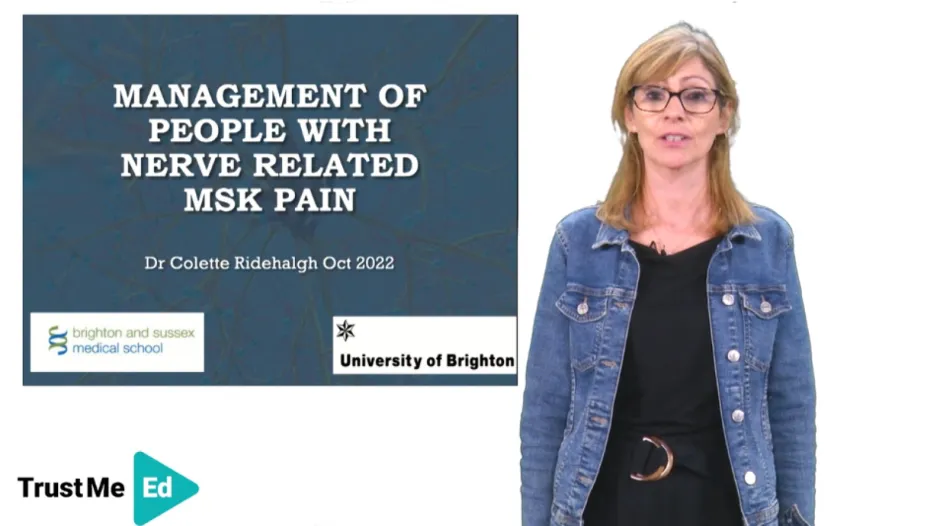
The lecture aims to provide an overview of the definitions, classification, and pathophysiological mechanisms behind nerve-related MSK conditions. Some of the most pertinent assessment and management strategies are detailed and the evidence both from a mechanistic perspective as well as considering the efficacy from human studies is discussed. There is a short practical video where I demonstrate assessing neurological integrity (in an MSK setting) and some tests for heightened nerve mechanosensitivity. Whilst these are basic skills that most people will have been taught as an undergraduate, I give some tips on optimizing these skills to try to ensure a more repeatable and accurate assessment.
At the end of the session you will:
Learn how to perform key neurological integrity and neurodynamic tests with clear, practical guidance for sensation, reflexes, muscle strength, and nerve mechanosensitivity. You’ll discover how to compare findings accurately, reproduce symptoms safely, and use structural differentiation to sharpen clinical reasoning.
Explore how to recognize, assess, and manage nerve-related musculoskeletal pain by distinguishing neuropathic, nociceptive, and mechanosensitive presentations. Learn the key symptoms, clinical tests, common conditions, and evidence-based treatment strategies that can guide smarter, more confident decisions in practice.
The lecture aims to provide an overview of the definitions, classification, and pathophysiological mechanisms behind nerve-related MSK conditions. Some of the most pertinent assessment and management strategies are detailed and the evidence both from a mechanistic perspective as well as considering the efficacy from human studies is discussed. There is a short practical video where I demonstrate assessing neurological integrity (in an MSK setting) and some tests for heightened nerve mechanosensitivity. Whilst these are basic skills that most people will have been taught as an undergraduate, I give some tips on optimizing these skills to try to ensure a more repeatable and accurate assessment.
At the end of the session you will:
We usually answer within a minute.
Ask anything about your membership, certificates or what is in the library.
No comments yet…