🍪 We use cookies
We use cookies to enhance your experience, analyze site traffic, and for marketing purposes. By clicking "Accept All", you consent to our use of cookies. Read our Privacy Policy


Learning Points
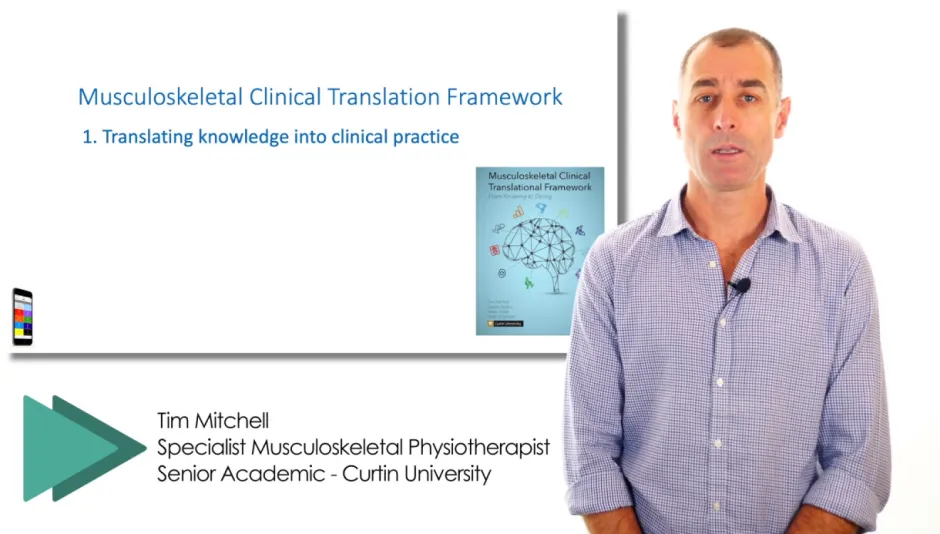
1. Translating knowledge into clinical practice
- Gain a contemporary overview of the musculoskeletal pain landscape
- Be aware of the key opportunities for physiotherapist
- Gain an overview of how the Musculoskeletal Clinical Translation Framework can assist translating this knowledge with individual patients
2. What you might be missing with your patients
- Learn about the different component of the Framework and how they can be applied with your patients
- Gain a better understanding of why some of your patients don’t recover like you expect them to
3. Applied case study
- Understand how the Framework is used in the clinical with an applied case study
You can learn more in the ebook Tim described here: https://www.musculoskeletalframework.net/
Learning objectives
> You should be able to address some challenges with musculoskeletal management
> You should be able to describe how the Musculoskeletal Clinical Translation Framework can assist in translating knowledge to patients
> You should be able to review the different components of the framework, and describe how they can be applied with your patients
> You should be able to understand why some of your patients don't recover like you expect them to
Follow a clear case study of acute low back pain and see how a clinical framework sharpens assessment, diagnosis, and management. Learners will discover how pain features, movement habits, work demands, and patient beliefs guide practical, guideline-based care and recovery planning.
Discover a practical framework that helps clinicians turn pain science and guidelines into clearer, more individualized care for musculoskeletal conditions. Learn why traditional injury-based thinking often falls short and how a broader biopsychosocial approach can improve assessment, decision-making, and recovery.
Discover how to spot the hidden factors behind musculoskeletal pain when recovery stalls, from patient beliefs and psychosocial risks to lifestyle, pain patterns, and functional behaviors. Learn a practical framework that helps you ask better questions, personalize care, and guide patients toward better outcomes.
Discover a practical, modern framework for understanding musculoskeletal pain that goes far beyond finding a “painful structure.” Learn how beliefs, movement, lifestyle, and communication shape recovery—and how better clinical reasoning can help people regain confidence, function, and control.
Learning Points
1. Translating knowledge into clinical practice
- Gain a contemporary overview of the musculoskeletal pain landscape
- Be aware of the key opportunities for physiotherapist
- Gain an overview of how the Musculoskeletal Clinical Translation Framework can assist translating this knowledge with individual patients
2. What you might be missing with your patients
- Learn about the different component of the Framework and how they can be applied with your patients
- Gain a better understanding of why some of your patients don’t recover like you expect them to
3. Applied case study
- Understand how the Framework is used in the clinical with an applied case study
You can learn more in the ebook Tim described here: https://www.musculoskeletalframework.net/
Learning objectives
> You should be able to address some challenges with musculoskeletal management
> You should be able to describe how the Musculoskeletal Clinical Translation Framework can assist in translating knowledge to patients
> You should be able to review the different components of the framework, and describe how they can be applied with your patients
> You should be able to understand why some of your patients don't recover like you expect them to
We usually answer within a minute.
Ask anything about your membership, certificates or what is in the library.
No comments yet…