🍪 We use cookies
We use cookies to enhance your experience, analyze site traffic, and for marketing purposes. By clicking "Accept All", you consent to our use of cookies. Read our Privacy Policy


Learning objectives
> You should be able to describe some characteristics of low back pain, and say something about the burden of low back pain on a global scale.
> You should be able to discuss important components that need to be implemented in the treatment of low back pain.
> You should be able to discuss the gap between evidence and practice, and outline rational and evidence-based treatments for low back pain.
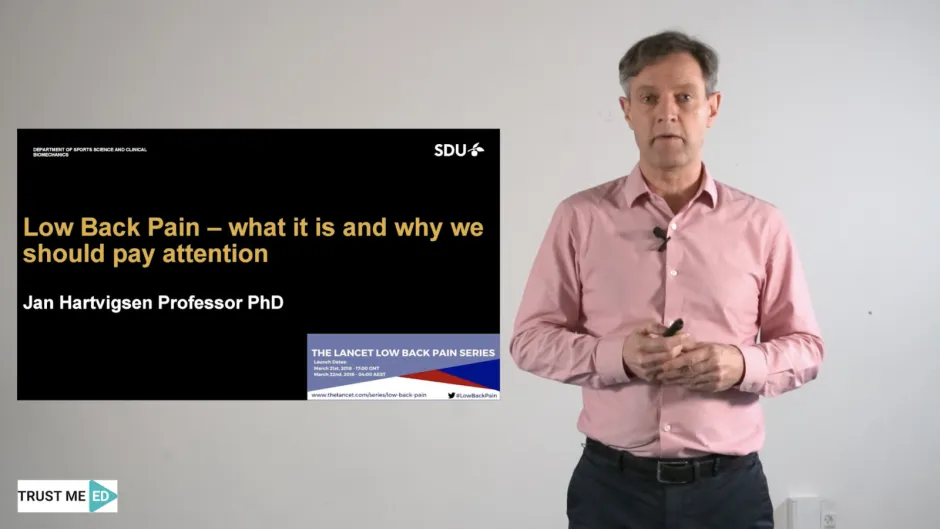
Discover why the old structural model of low back pain often falls short, and what the evidence really says about imaging, red flags, prevention, and treatment. Learn how exercise, education, and a broader biopsychosocial approach can reduce recurrence and improve care.
Discover why low back pain care so often ignores the evidence, fueling unnecessary scans, opioids, rest, and disability worldwide. Learn which practical reforms—from better clinician education to smarter policy and stratified care—could close the gap and improve outcomes on a global scale.
Discover why low back pain has become the world’s leading cause of disability, and why common beliefs about its causes and treatment often miss the mark. Learn how biology, psychology, and social factors interact—and what must change to reduce suffering and improve care worldwide.
Discover a modern, evidence-based approach to low back pain that moves beyond fear, overcorrection, and quick fixes. Learn why patient education, exercise, self-management, and better communication may matter more than scans or passive treatment—and how flare-ups can be understood without alarm.
Learning objectives
> You should be able to describe some characteristics of low back pain, and say something about the burden of low back pain on a global scale.
> You should be able to discuss important components that need to be implemented in the treatment of low back pain.
> You should be able to discuss the gap between evidence and practice, and outline rational and evidence-based treatments for low back pain.
We usually answer within a minute.
Ask anything about your membership, certificates or what is in the library.
No comments yet…