🍪 We use cookies
We use cookies to enhance your experience, analyze site traffic, and for marketing purposes. By clicking "Accept All", you consent to our use of cookies. Read our Privacy Policy


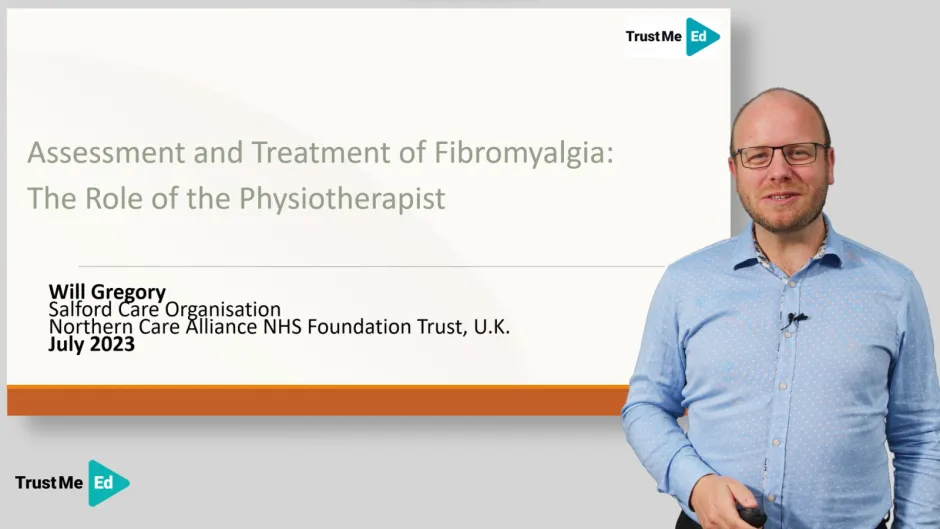
Chronic wide spread pain is experienced by up to 10% of the world population, we have a responsibility as healthcare practitioners to keep up to date on the assessment, diagnosis and treatment of such pain conditions.
Fibromylagia makes up 20-50% of chronic widespread pain cases, and yet is a diagnosis not too well understood by patients and scientists alike.
This lecture will explore the current issues with diagnosis and treatment of fibromyalgia and embed this information into practical tips for how you as a health care practitioner can support people living with fibromyalgia.
Learning points:
How common chronic widespread pain and fibromyalgia are, why physiotherapists find the condition hard to manage, and the eight key patient features plus one clinician factor that point toward the diagnosis.
How fibromyalgia is diagnosed with the ACR 2010 and 2016 criteria instead of tender points, why giving the diagnosis helps, and how education is matched to the patient's level of activation.
Why poor sleep may drive pain in fibromyalgia, how supported sleep self-management with wearables and apps works in practice, and what current guidance says about amitriptyline, duloxetine, opioids and gabapentinoids.
Why exercise is the only strongly recommended treatment for fibromyalgia, how graded exercise and group programs are delivered, and how one UK rheumatology service structures its pathway from diagnosis to long-term rehabilitation.
Future directions in fibromyalgia, from more sensitive outcome measures and the search for a blood test to brain research on pain waves and the growing role of physiotherapists in diagnosis and long-term care.
Chronic wide spread pain is experienced by up to 10% of the world population, we have a responsibility as healthcare practitioners to keep up to date on the assessment, diagnosis and treatment of such pain conditions.
Fibromylagia makes up 20-50% of chronic widespread pain cases, and yet is a diagnosis not too well understood by patients and scientists alike.
This lecture will explore the current issues with diagnosis and treatment of fibromyalgia and embed this information into practical tips for how you as a health care practitioner can support people living with fibromyalgia.
Learning points:
We usually answer within a minute.
Ask anything about your membership, certificates or what is in the library.
No comments yet…