🍪 We use cookies
We use cookies to enhance your experience, analyze site traffic, and for marketing purposes. By clicking "Accept All", you consent to our use of cookies. Read our Privacy Policy


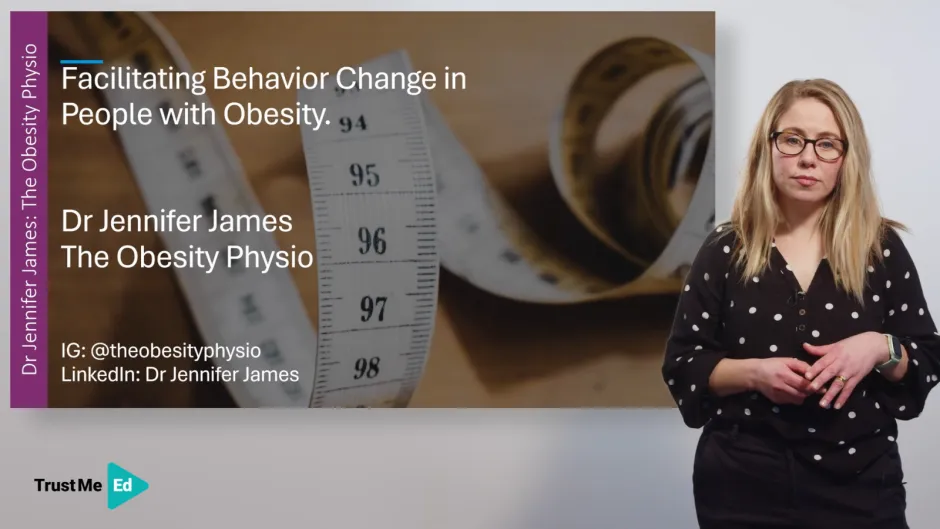
This is the second in a two-lecture series that provides a comprehensive overview of obesity as well as behavior change in people with obesity (watch the first lecture here). This second lecture explores how to facilitate behavior change in people with obesity, drawing on theory and evidence, and relates these strategies to clinical practice.
Learning points:
● Obesity is associated with physical and mental (ill)health including non-communicable diseases, and its impact extends beyond health.
● Pharmacotherapy treatment for obesity is gaining pace and producing weight loss outcomes that are far beyond what has been observed previously, and many people are buying these medications privately.
● Weight loss (regardless of mechanism) is associated with bone and muscle loss – which could be of concern in the future.
● To deliver evidence-based care to patients with obesity, we must ensure that we do not stigmatise them or their obesity, by improving our knowledge and understanding of obesity, and our communication skills.
● We need to ensure that our interventions are theory and evidence based and meet the needs of our patients – there needs to be a sound rational for our interventions and our approach must respect patient autonomy.
How to raise weight with a patient without harming rapport, why open questions work better than asking why, and how weight stigma in healthcare affects trust, attendance and outcomes for people with obesity.
Defining behavior and behavior change interventions, then using the COM-B model, the behavior change wheel and the Theoretical Domains Framework to find what stops a patient from changing and choose an intervention that meets it.
Behavior change techniques from the 93-item taxonomy as the active ingredients of an intervention, the spirit and guiding principles of motivational interviewing, and a worked example on regular pain relief for people with obesity.
This is the second in a two-lecture series that provides a comprehensive overview of obesity as well as behavior change in people with obesity (watch the first lecture here). This second lecture explores how to facilitate behavior change in people with obesity, drawing on theory and evidence, and relates these strategies to clinical practice.
Learning points:
● Obesity is associated with physical and mental (ill)health including non-communicable diseases, and its impact extends beyond health.
● Pharmacotherapy treatment for obesity is gaining pace and producing weight loss outcomes that are far beyond what has been observed previously, and many people are buying these medications privately.
● Weight loss (regardless of mechanism) is associated with bone and muscle loss – which could be of concern in the future.
● To deliver evidence-based care to patients with obesity, we must ensure that we do not stigmatise them or their obesity, by improving our knowledge and understanding of obesity, and our communication skills.
● We need to ensure that our interventions are theory and evidence based and meet the needs of our patients – there needs to be a sound rational for our interventions and our approach must respect patient autonomy.
We usually answer within a minute.
Ask anything about your membership, certificates or what is in the library.
No comments yet…