🍪 We use cookies
We use cookies to enhance your experience, analyze site traffic, and for marketing purposes. By clicking "Accept All", you consent to our use of cookies. Read our Privacy Policy


Learning points
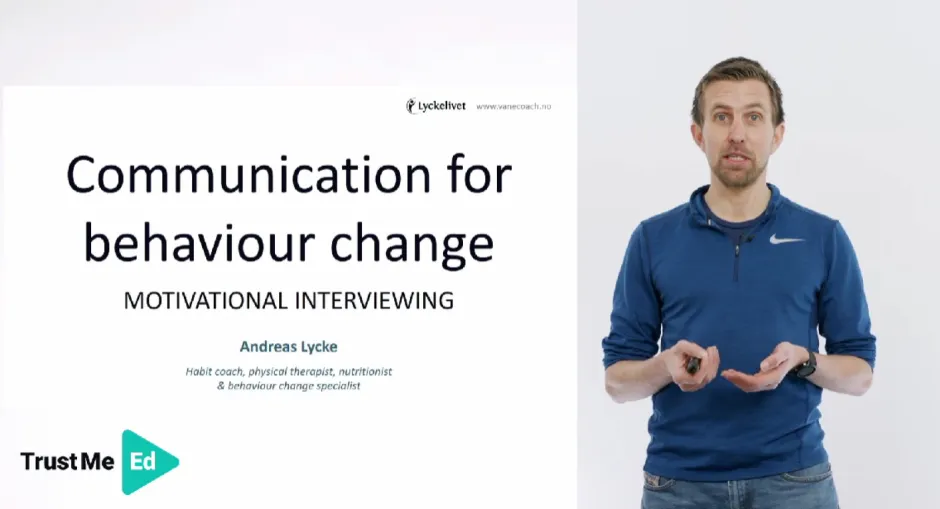
You learn an easy and practical model of human motivation, and how you can use Motivational Interviewing (MI) to help your patients with behaviour change. MI Is the best evidence-based approach for helping patients change health behaviour.
After an introduction to the principles of MI, you get several examples on how to use communication skills like open questions, reflections and summarizing. Then you learn how to use practical tools like decisional balance, scaling questions and agenda mapping to help your patients explore and increase their motivation for change.
Learn how motivational interviewing helps patients find their own reasons to change, building motivation through acceptance, compassion, and collaboration rather than advice-giving. Explore the four key processes and practical communication skills that make conversations more engaging, empowering, and effective.
Learn how motivational interviewing helps patients turn good intentions into lasting lifestyle change by strengthening what matters most to them and building confidence to act. Discover practical communication tools you can use in limited time to spark healthier habits in exercise, nutrition, sleep, and more.
Learn how to guide patient conversations with open questions, recognize change talk, and respond effectively when someone feels unsure or resistant. You’ll also discover practical tools like agenda mapping, scaling questions, and decisional balance to build motivation and turn readiness into a realistic plan.
Learning points
You learn an easy and practical model of human motivation, and how you can use Motivational Interviewing (MI) to help your patients with behaviour change. MI Is the best evidence-based approach for helping patients change health behaviour.
After an introduction to the principles of MI, you get several examples on how to use communication skills like open questions, reflections and summarizing. Then you learn how to use practical tools like decisional balance, scaling questions and agenda mapping to help your patients explore and increase their motivation for change.
We usually answer within a minute.
Ask anything about your membership, certificates or what is in the library.
No comments yet…