🍪 We use cookies
We use cookies to enhance your experience, analyze site traffic, and for marketing purposes. By clicking "Accept All", you consent to our use of cookies. Read our Privacy Policy


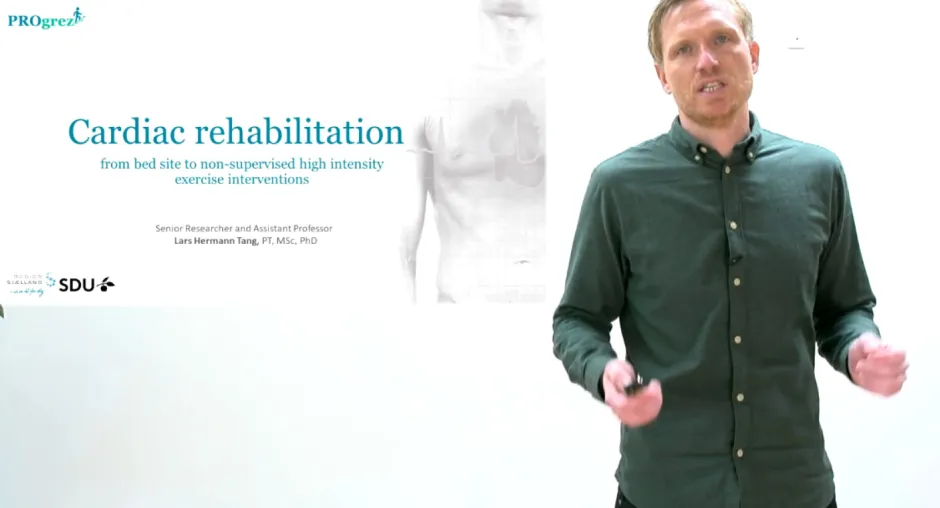
The lecture starts with a short presentation to the heart, it structures and functionality in relation to coronary heart disease. Hereafter a broader definition and the development of cardiac rehabilitation is made before zooming in on the effectiveness of exercise training and exercise-based cardiac rehabilitation, and the corresponding clinical guidelines for exercising with cardiac patients. Finally, the lecture addresses one of the major challenges in cardiac rehabilitating namely the low attendance rate, and in the light of this, discuss facilitators and barriers and if the use of alternative delivery models is the way to increase the uptake to these services.
A few learning points
Exercise is a core component in cardiac rehabilitation
Exercise can be effectively delivered in many different forms and shapes but most reflect individual patients needs and preferences.
Always follow exercise guidelines and have strategies to meet individual facilitators and barriers for attending cardiac rehabilitation services.
Discover how cardiac rehabilitation evolved from strict bed rest to personalized exercise that improves survival, quality of life, and recovery after heart disease. Learn why exercise is central, how safety and guidelines shape treatment, and what helps more patients take part.
Discover why cardiac rehabilitation is far more than exercise alone, and how it improves quality of life, recovery, and long-term heart health. Learn what keeps people engaged, why many drop out, and how home-based and hybrid approaches can make care more accessible and effective.
The lecture starts with a short presentation to the heart, it structures and functionality in relation to coronary heart disease. Hereafter a broader definition and the development of cardiac rehabilitation is made before zooming in on the effectiveness of exercise training and exercise-based cardiac rehabilitation, and the corresponding clinical guidelines for exercising with cardiac patients. Finally, the lecture addresses one of the major challenges in cardiac rehabilitating namely the low attendance rate, and in the light of this, discuss facilitators and barriers and if the use of alternative delivery models is the way to increase the uptake to these services.
A few learning points
Exercise is a core component in cardiac rehabilitation
Exercise can be effectively delivered in many different forms and shapes but most reflect individual patients needs and preferences.
Always follow exercise guidelines and have strategies to meet individual facilitators and barriers for attending cardiac rehabilitation services.
We usually answer within a minute.
Ask anything about your membership, certificates or what is in the library.
No comments yet…