🍪 We use cookies
We use cookies to enhance your experience, analyze site traffic, and for marketing purposes. By clicking "Accept All", you consent to our use of cookies. Read our Privacy Policy


Learning Objectives:
1. Describe the collagen turnover rate in people.
2. State the effect of dietary collagen on collagen synthesis.
3. Describe requirement for vitamin C for collagen synthesis.
4. Define the effect of whey protein on musculoskeletal tissues
5. Explain how cocoa alters collagen production.
6. Name the next generation of collagen activators
7. Develop a program that combines nutrition with optimal loading to reverse tendinopathy.
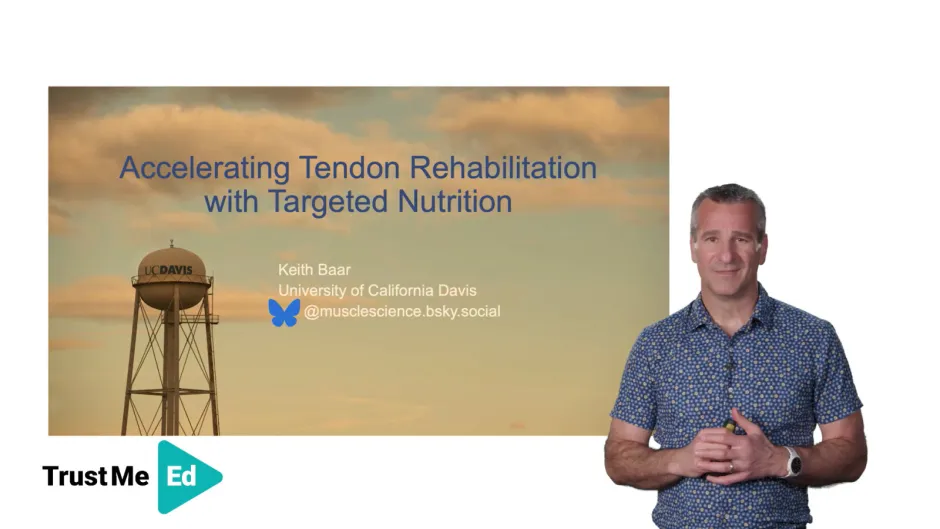
How quickly tendons, ligaments and cartilage turn over compared with muscle, how much the ACL can grow and shrink with training, and how native collagen, gelatin and hydrolyzed collagen differ.
The studies behind dietary collagen for connective tissue, including gelatin before jump rope, recombinant collagen, patellar tendon growth with collagen and vitamin C, cartilage outcomes, and why a whey and collagen blend may work together.
How screening natural products identified cocoa epicatechin as a stimulus for collagen gene expression, what it did for rate of force development, and how to time collagen, whey, vitamin C and loading to treat tendinopathy.
Learning Objectives:
1. Describe the collagen turnover rate in people.
2. State the effect of dietary collagen on collagen synthesis.
3. Describe requirement for vitamin C for collagen synthesis.
4. Define the effect of whey protein on musculoskeletal tissues
5. Explain how cocoa alters collagen production.
6. Name the next generation of collagen activators
7. Develop a program that combines nutrition with optimal loading to reverse tendinopathy.
We usually answer within a minute.
Ask anything about your membership, certificates or what is in the library.
No comments yet…